Exporting a vehicle is not simply a matter of accepting an offer and arranging a tow truck. If you are comparing a used car exporter Singapore vehicle owners can work with, first confirm who will handle the permit, deregistration sequence, shipping records and final proof of disposal. Sorting out those responsibilities before collection is the easiest way to avoid delays and unexpected deductions.
Most problems begin with small details that were checked too late: an outstanding hire-purchase loan, a chassis number that does not match the paperwork, a vehicle that was deregistered before transport was ready, or a Bill of Lading that is missing a required identifier. This guide explains the practical steps to take before you export a car from Singapore and the questions worth putting in writing.
Important: Procedures and eligibility rules can change. Check the latest Singapore Customs and LTA guidance for your vehicle before acting.
What do you need to export a car from Singapore?
A well-managed export normally follows these ten stages:
- Decide whether complete-vehicle export is the best route.
- Clear ownership, financing and outstanding matters.
- Prepare accurate vehicle information and current photographs.
- Obtain a written net quotation.
- Assign responsibility for the Customs export permit.
- Confirm the correct collection and deregistration sequence.
- Check the engine, chassis and registration details.
- Collect the correct shipping documents.
- Submit acceptable disposal proof to LTA on time.
- Check whether PARF or COE rebates apply.
Singapore Customs requires a Customs export permit for motor vehicles being permanently exported. The registered owner also remains responsible for following LTA's disposal requirements, even when an exporter or agent handles the day-to-day paperwork.
1. Decide whether complete export is the right route
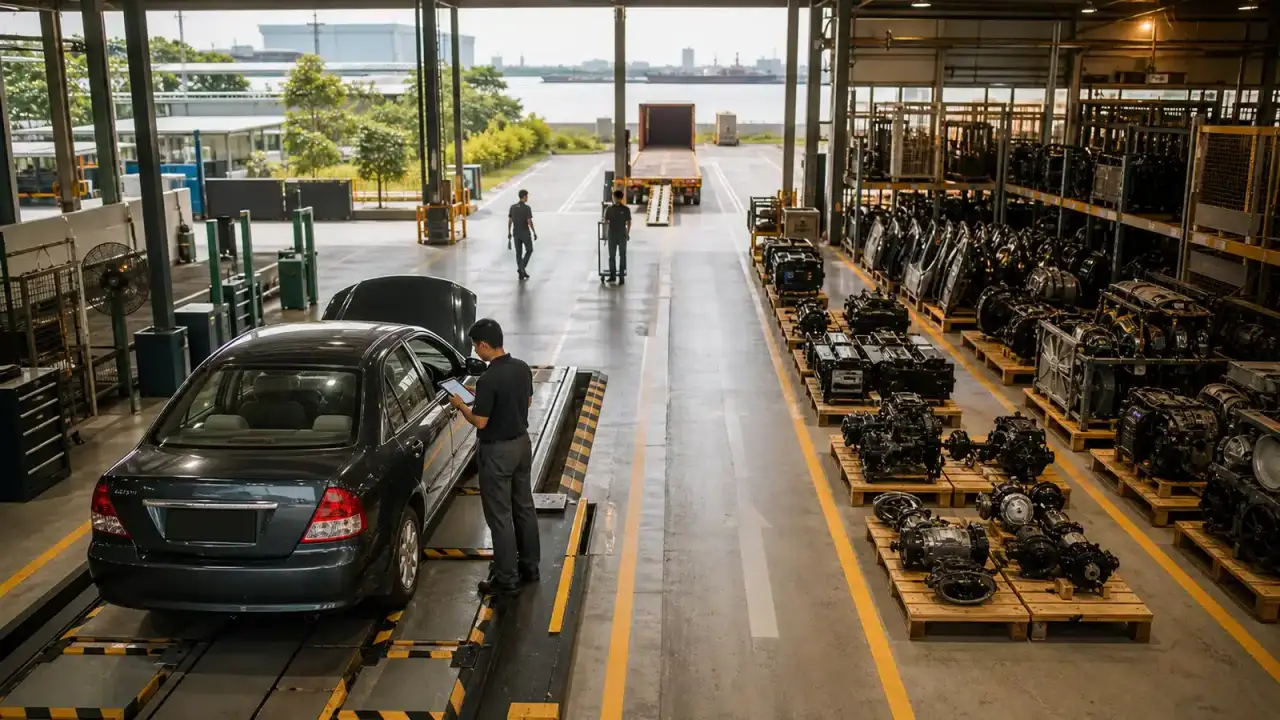
Not every used or damaged car should be shipped as a complete vehicle. Overseas demand may make complete export sensible, but accident damage, missing components, destination restrictions and freight costs can change the calculation. In some cases, recovering the engine, gearbox or reusable used car parts produces a more practical outcome.
Ask what the buyer's offer is based on: the complete vehicle, selected components, recyclable material, or a combination of routes. Two offers can look similar while assuming very different disposal methods and costs. Understanding the intended route makes the quotations easier to compare.
2. Clear ownership, financing and outstanding matters
Before agreeing to collection, check that the vehicle can legally be released and deregistered. If a hire-purchase agreement is still active, contact the finance company and obtain a settlement figure. Do not assume that an exporter's payment will automatically clear the loan unless the arrangement is documented.
Confirm the following:
- The vehicle is registered in your name.
- Any finance interest has been cleared or a settlement process is agreed.
- Road-tax arrears and other LTA amounts have been checked.
- Workshop, storage or recovery charges are known.
- Any person acting for you has the necessary authority.
- A registration-number retention request, if needed, will be made on time.
This early check prevents a collection date from arriving while the legal or financial release is still unresolved.
3. Build an accurate vehicle information pack
A useful export assessment needs more than a registration number. Prepare the make and exact model, manufacturing and registration years, mileage, COE expiry date, engine capacity, fuel or powertrain type, transmission, engine number, chassis number and present location.
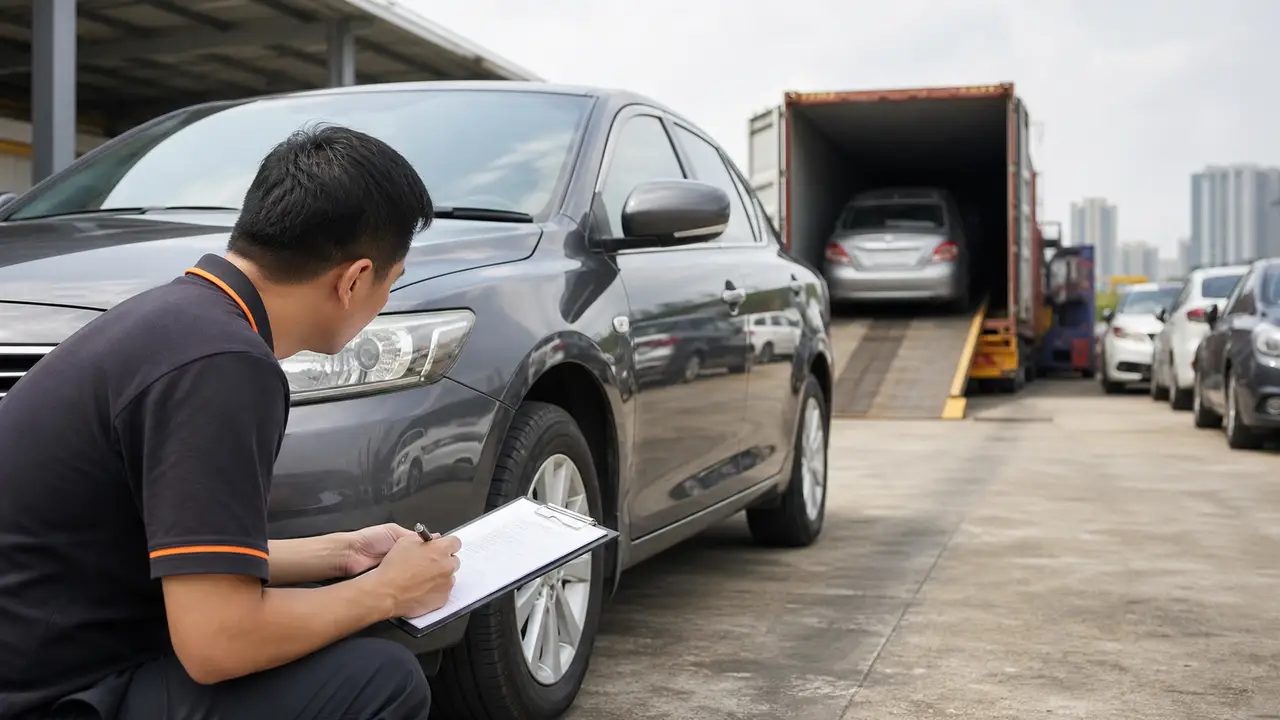
Be direct about the current condition. Mention accident history, flood or fire exposure, warning lights, mechanical faults and any parts that are missing. Recent photographs should show the front, rear, both sides, interior, dashboard mileage, engine bay, wheels and damaged areas. Old photographs taken before an accident or breakdown do not help the buyer price the vehicle accurately.
Complete information protects both sides. It gives the buyer a sound basis for the quotation and reduces the chance of a last-minute revision when the vehicle is inspected.
4. Ask for a written net quotation
The highest headline figure is not always the best offer. Ask for the amount you will actually receive after the agreed charges, and have the inclusions listed in writing.
Check whether the quotation covers:
- Inspection, collection and towing.
- Storage and vehicle preparation.
- Export and declaring-agent fees.
- Port handling, packing or container loading.
- Administrative charges.
The quotation should also say whether it is final based on the disclosed condition, subject to physical inspection, time-limited or dependent on overseas demand. A genuine material difference, such as an undisclosed missing engine or severe structural damage, can justify reassessment. Routine collection and paperwork costs should not appear as a surprise if they could have been explained earlier.
5. Assign responsibility for the Customs export permit
A motor vehicle being permanently exported must be covered by a Customs export permit. According to Singapore Customs guidance for exporting vehicles, the owner or an appointed declaring agent must obtain the permit before export through TradeNet. The declared vehicle value is its Free on Board value, excluding freight and insurance.
Before handover, record who is the exporter of record, who will submit the application, whether a declaring-agent fee is included and who will send you the approved permit. Ask who will correct the application if a vehicle number or declared detail is wrong.
A promise that "all paperwork is included" is not specific enough. Assign every document to a named party and keep that agreement with the quotation.
6. Confirm collection and deregistration in the right order
The correct sequence depends partly on the vehicle and its PARF eligibility. Do not deregister simply because the offer is attractive. First confirm the collection date, transport method, shipment plan, temporary storage and the person responsible for the final disposal records.
Once deregistered, the car cannot be kept or driven normally on Singapore roads. It must be moved appropriately to the disposal or export location. LTA's current vehicle deregistration and disposal guidance explains the sequence and proof requirements for different disposal methods.
If collection is from a basement, workshop or restricted car park, describe the access before booking transport. Vehicle height, turning space, security clearance and whether the wheels can roll all affect the recovery plan.
7. Check every vehicle identifier
Small transcription errors can hold up a permit, shipping document or LTA submission. Compare the vehicle and records for the chassis number, engine number, registration number, make and model. For an electric vehicle, check the relevant motor identifier. Where applicable, verify container and seal numbers as well.
Take clear photographs of the stamped or labelled identifiers where it is safe to do so. Do not publish these images publicly; keep them with the transaction records. Before shipment, compare the permit and transport documents against the photographs rather than relying on memory.
8. Collect the right shipping documents
The evidence needed by LTA depends on how the vehicle leaves Singapore.
Export by sea
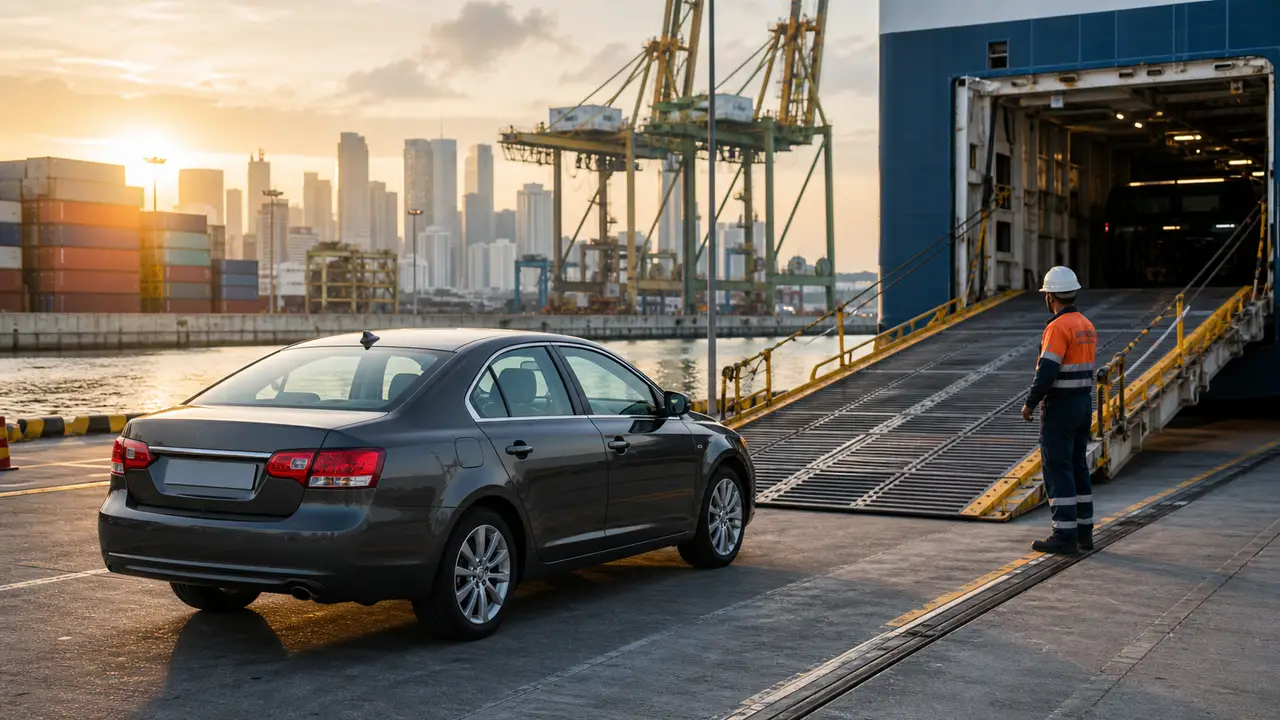
For ocean freight, the key records normally include the Cargo Clearance Permit and an endorsed, non-negotiable copy of the Bill of Lading. Check that the Bill of Lading carries the relevant exporter or importer details, vessel and voyage number, destination, vehicle identifier, shipment date and container or seal details where applicable.
Export by land
For land export, the Cargo Clearance Permit and the relevant Malaysian Customs import declaration may be required. A certified true copy of a foreign registration document may also be accepted in applicable circumstances.
Ask when the records will become available, who will check them and how you will receive copies. Shipping documents are often issued after collection, so set a follow-up date rather than leaving the transaction open-ended.
9. Submit disposal proof and check the result
Collection is not the end of the owner's responsibility. LTA currently requires acceptable proof of export or another approved disposal method within one month of deregistration. Confirm who will receive the shipping documents, upload them, respond if LTA rejects a record and notify you when the submission is complete.
Photograph the vehicle at handover, remove personal belongings and keep the collection acknowledgement. After the documents are submitted, check that the vehicle status shown in LTA's records is correct. A vehicle leaving the collection point is not proof that the administrative process is finished.
10. Separate the sale price from PARF and COE rebates
An owner may qualify for a PARF or COE rebate after deregistration and proper disposal, depending on the vehicle's type, age, registration history and remaining COE period. LTA's PARF and COE rebate guidance provides the current eligibility and validity rules.
The exporter's payment and an LTA rebate are not necessarily the same payment. Ask whether the quotation covers only the vehicle's body or export value, who receives any rebate, whether the rebate has been deducted from the offer and when each amount will be paid.
Compare the full net outcome instead of one headline number. A slightly lower vehicle offer with clear costs, prompt payment and complete documentation can be more valuable than a higher offer with uncertain deductions.
Common causes of vehicle-export delays
- Active financing: the finance interest was not cleared before deregistration or handover.
- Incomplete identifiers: an engine or chassis number is missing, unclear or entered incorrectly.
- Undisclosed condition: accident, flood or mechanical damage is discovered during collection.
- Unassigned permit work: each party assumes someone else is submitting the TradeNet application.
- Early deregistration: shipment or transport is not ready when the vehicle can no longer be used normally.
- Incomplete shipping records: the Bill of Lading lacks a required identifier, endorsement or shipment date.
- Difficult access: the recovery vehicle cannot enter the collection location.
- No post-shipment follow-up: the vehicle has departed, but disposal proof has not been submitted.
Most of these delays are preventable. A short written responsibility list, checked before collection, is more useful than trying to reconstruct decisions after the vehicle has moved.
Export-readiness checklist
- The export route and valuation basis are explained.
- Financing and outstanding LTA matters are checked.
- Current vehicle photographs and honest condition details are supplied.
- Engine, chassis and registration details match the records.
- The net quotation, deductions and payment timing are written down.
- Collection access and towing requirements are confirmed.
- The declaring agent and Customs permit responsibility are identified.
- The correct deregistration sequence is confirmed.
- The required shipping and disposal documents are understood.
- A named party will submit disposal proof and report the result.
- Handover photographs and document copies will be retained.
- The final vehicle status will be checked with LTA.
How Everise Auto can help
Everise Auto, operated by Singapura Cars & Parts Pte Ltd, assesses used, damaged and end-of-life vehicles for complete export, parts recovery, local parts supply, dismantling or scrapping. The practical route depends on the vehicle's condition and current market demand, so the assessment begins with accurate details rather than a one-size-fits-all promise.
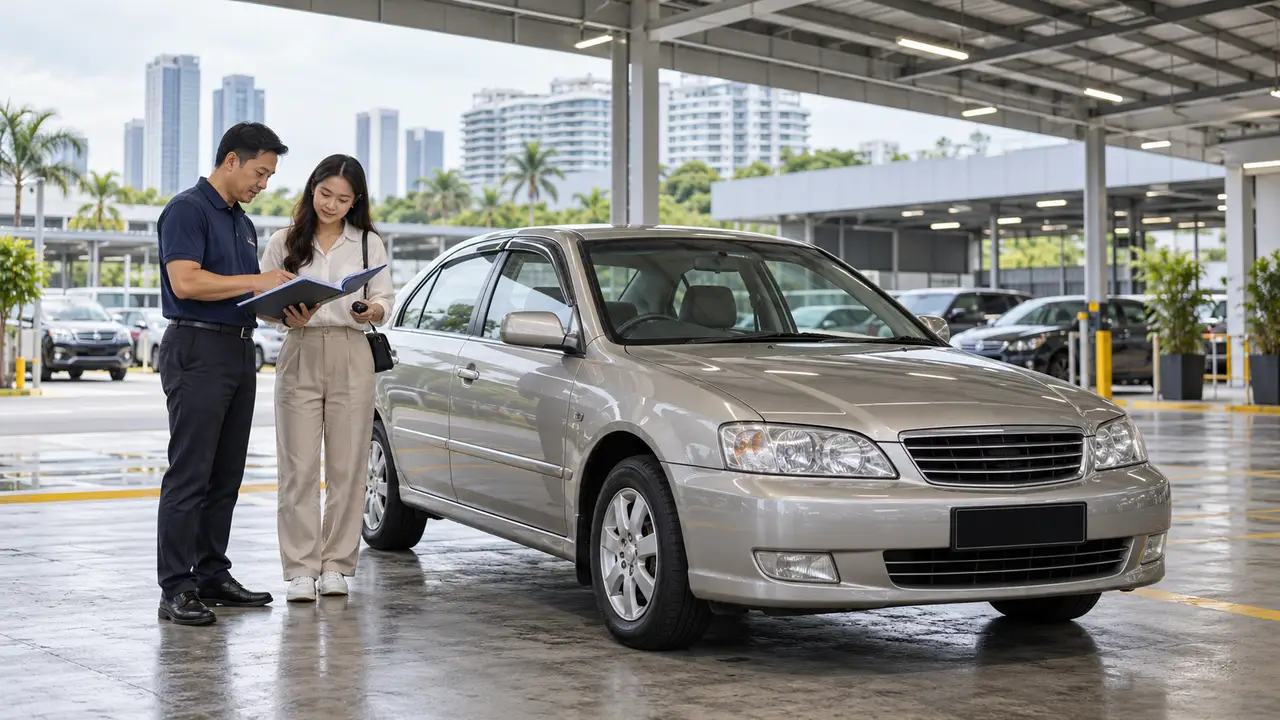
For a useful assessment, provide the exact model, registration year, mileage, COE expiry, engine and transmission details, present mechanical condition, accident history, location and recent photographs. If complete export is not the best option, you can also review the process to sell your used car in Singapore.
Frequently asked questions
What does a used car exporter in Singapore do?
A used car exporter evaluates a vehicle for overseas demand, coordinates collection and shipment, and works with freight or declaring agents on the export records. Depending on the vehicle, it may be shipped complete or dismantled so usable components can be exported separately.
Do I need to deregister the car before export?
The sequence depends on the vehicle and the applicable LTA procedure, including whether it is PARF-eligible. Confirm the current sequence before collection. Deregistering too early can leave a vehicle unable to be driven while shipment is still being arranged.
Which documents are normally required?
A Customs export permit is required. For ocean freight, the disposal records generally include the Cargo Clearance Permit and an endorsed, non-negotiable Bill of Lading. For land export, the Cargo Clearance Permit and Malaysian Customs import declaration may apply. Always verify the current LTA list for your route.
Can a non-running or accident-damaged car be exported?
Possibly. Demand, repair economics, freight cost and the remaining usable components all matter. A non-running car may still be exported for repair, or dismantled for engines, gearboxes, panels, interior parts and electronics.
How long does it take to export a car from Singapore?
There is no fixed timeline. Financing clearance, inspection, permit preparation, freight availability, destination requirements and document issuance can all affect it. Ask for target dates for collection, permit approval, loading, shipment and document delivery.
Should I automatically accept the highest offer?
No. Compare the final amount after towing, storage, permit, handling and administrative charges. Also compare payment timing, paperwork support and who remains responsible if a disposal record is rejected.
Prepare the export before releasing the vehicle
A smooth export starts before the tow truck arrives. Check the ownership and identifiers, disclose the current condition, agree on a net quotation, assign every document and understand the deregistration sequence. Then follow the transaction through to the final LTA status rather than stopping at collection.
To discuss complete export, parts recovery or another disposal route, contact Everise Auto with the vehicle details, COE expiry date, location and recent photographs.