Selling a company-registered vehicle involves more than agreeing on a price. Before comparing Singapore car exporters or using a sell your car Singapore service, the business needs to confirm who can approve the sale, whether finance remains outstanding, how GST should be treated and who will complete the transfer or export paperwork.
The same checks matter even more when several cars, vans or lorries are being replaced together. A clear process protects the company from delayed payments, incomplete records and arguments over equipment, rebates or vehicle condition. This guide answers the practical questions businesses usually face when selling one vehicle or an entire fleet.
Quick answer: what should a business prepare?
Before requesting quotations, prepare:
- vehicle registration number, make, model and current mileage;
- COE expiry date, road-tax status and any PARF eligibility;
- service history, accident history and clear current photographs;
- outstanding finance and settlement information;
- the company UEN and authorised representative's details;
- a list of accessories, modifications and business equipment included; and
- the company's preferred payment, invoicing and collection arrangements.
For a fleet sale, put the information into one spreadsheet but keep a separate transaction file for every vehicle. That makes quotations easier to compare and keeps the audit trail clean.
1. Can a company sell a vehicle registered in its name?
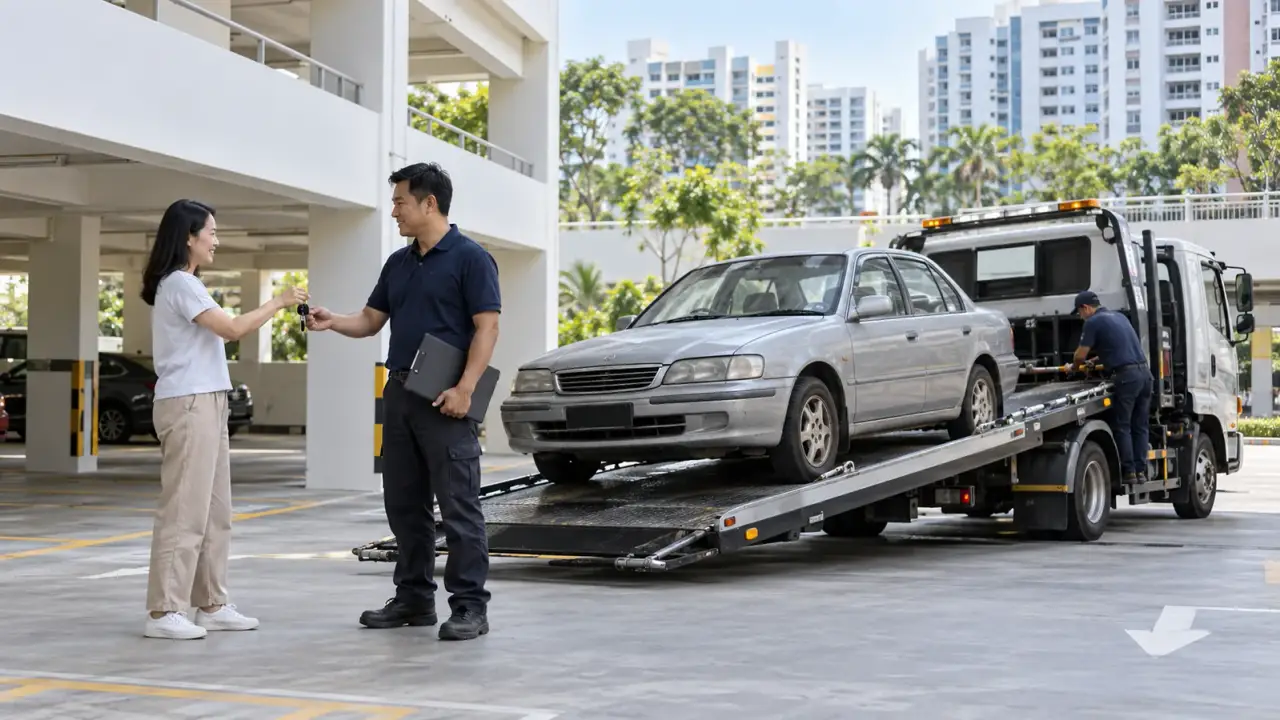
Yes. A company vehicle can be transferred to an individual, another business or a dealer if the applicable Land Transport Authority (LTA) requirements are met. LTA states that ownership must be transferred within seven days when a vehicle is sold or changes hands. The vehicle should also have no unresolved matters such as an outstanding loan or road-tax arrears.
Confirm the authorised seller before negotiations start. Depending on the organisation, this may be a director, partner, sole proprietor or a manager authorised by the finance, operations or fleet team.
2. Who should handle the sale?
Choose one authorised person to own the transaction from quotation to handover. They should be able to approve the price, verify the buyer, arrange finance settlement, issue the invoice, initiate the transfer and retain the final records.
Online vehicle transactions should only be completed through the company's approved access. Never give a buyer or outside party another person's login credentials.
3. Which company documents may be needed?
The exact list depends on the buyer and whether the vehicle is staying in Singapore or being exported. Common records include the company name and UEN, vehicle details, the authorised representative's identification, a letter of authorisation where required, finance-settlement confirmation, a written quotation, sale agreement, invoice or receipt and collection acknowledgement.
If export or deregistration is involved, retain the permit, shipping and proof-of-disposal documents as well.
4. Can a financed company vehicle be sold?
The financing interest needs to be settled before transfer or deregistration. Ask the finance company for the outstanding amount, payment instructions, settlement deadline and confirmation of when its interest will be released.
Keep the buyer's offer and the loan settlement as separate figures unless the written agreement clearly explains how the money will move. If an offer is S$35,000 and the settlement is S$12,000, for example, document whether the buyer pays the company in full or sends part directly to the finance company.
5. Should the business sell locally or export?
A local sale can work well for a roadworthy vehicle with useful COE remaining, clear service records and steady demand in Singapore. Export may be more suitable when local demand is weak, the model has demand overseas, the vehicle is approaching deregistration or its engine, gearbox and other components still have value.
Compare the final net amount, not just the headline quote. Collection, storage, documentation or administrative deductions can change the result.
6. How are company cars and fleet vehicles valued?
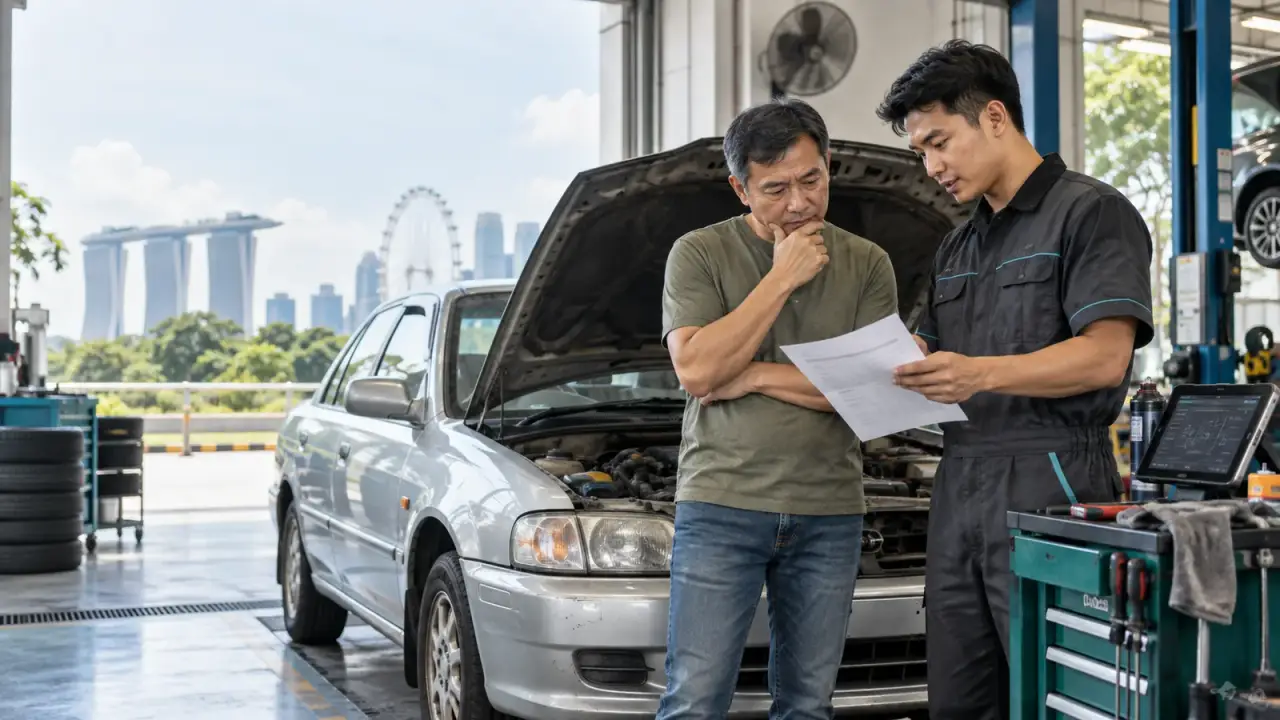
Buyers typically consider the make, model, registration year, mileage, COE expiry, PARF eligibility, engine and gearbox condition, service history, accident history, body and interior condition, tyres, modifications and current market demand.
Commercial use does not automatically make a vehicle unattractive. A well-maintained van with complete records can be easier to assess than a privately owned vehicle with no history. Heavy loading, high mileage and long operating hours will still affect the offer.
7. Can several vehicles be sold together?
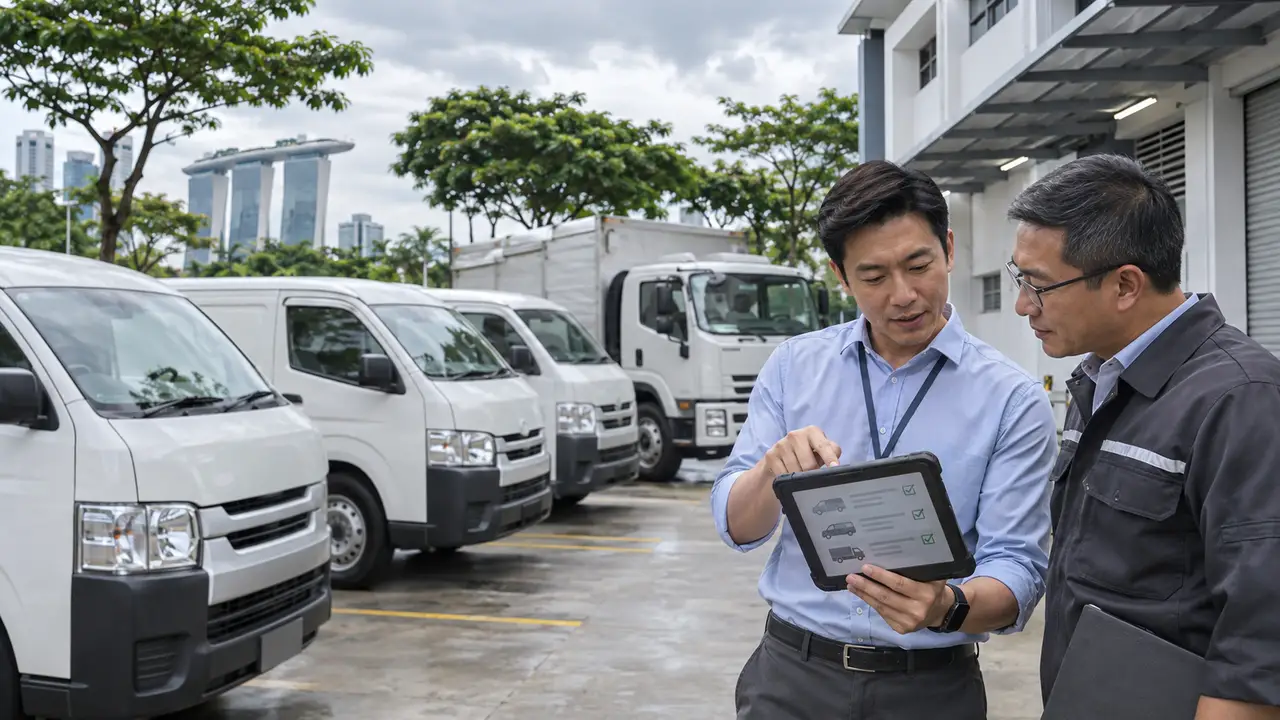
Yes. A group sale can reduce administration, especially when similar vehicles are being replaced under one fleet-renewal programme. Give every buyer the same fleet list so the quotes are comparable.
| Information | What to include |
|---|---|
| Vehicle | Registration number, exact model and registration date |
| Usage | Current mileage, location and typical duty |
| Timing | COE expiry and preferred collection date |
| Condition | Running, non-running, damaged or under repair |
| Finance | Clear or outstanding, with settlement details if available |
| Notes | Known faults, missing parts, equipment and modifications |
Even for a bulk sale, request a price for each unit. One combined figure can hide which vehicles have stronger resale, export or parts value.
8. Does GST apply to the sale?
GST treatment depends on the seller and the transaction. IRAS says GST-registered businesses must charge GST when selling motor vehicles, even if input tax on the purchase was disallowed. For a second-hand vehicle used by a business, the Discounted Sale Price Scheme may apply; under the scheme, GST is computed on 50% of the selling price.
Have the accountant confirm the treatment before issuing the invoice, including whether the agreed figure is GST-inclusive or GST-exclusive. This guide is not tax advice.
9. What belongs in the sale agreement?
Record the seller's legal name and UEN, buyer's details, vehicle registration number, make and model, price, GST treatment, deposit and balance, known faults, finance arrangement, included equipment, transfer date, collection date and responsibility for towing or export paperwork.
Attach the fleet list when several units are sold. Written detail matters when vehicles are collected on different days.
10. When should ownership be transferred?
Transfer only after the final price and payment terms are agreed, financing is settled, the buyer's details are verified and the agreed funds have cleared. LTA's vehicle ownership transfer guidance advises sellers to ensure payment is received before transfer and handover.
When the next owner is a company, the seller will need its company registration number and business name to initiate the transfer.
11. Does the buyer need insurance?
For a local transfer, the next owner needs valid motor insurance covering the full period of the vehicle's road tax. Some vehicles have extra conditions. A heavy goods vehicle may require a suitable Vehicle Parking Certificate, while particular light goods vehicles transferred to an individual can have additional eligibility requirements.
12. What happens to road tax and rebates?
When ownership is transferred locally, LTA says paid taxes and eligible vehicle rebates move to the new owner. These can include remaining road tax and potential PARF or COE rebates. Do not assume the company will receive them separately after transfer.
Deregistration is different. Depending on the vehicle's type, age and remaining COE period, the registered owner may qualify for rebates after proper disposal.
13. When should a business approach Singapore car exporters?
Exporters are worth considering when local dealers show limited interest, several vehicles are being replaced together, the model has demand overseas or high-mileage vehicles still have useful engines and gearboxes.
A buyer may assess each unit for complete export, overseas repair, parts recovery, dismantling or recycling. Sharing accurate photographs and a complete fleet list helps the buyer recommend a realistic route instead of giving a generic estimate.
14. What is required to export a company vehicle?
Singapore Customs states that every vehicle permanently exported from Singapore must be covered by a Customs export permit obtained before export. The exporter or appointed declaring agent must declare the vehicle's Free on Board value, which excludes freight and insurance. Review the current vehicle export requirements before arranging shipment.
The agreement should identify the exporter of record, declaring agent, party paying permit charges, party arranging port delivery, recipient of the Bill of Lading and party responsible for submitting disposal evidence to LTA.
15. Can a damaged company vehicle still be sold?
Yes. A damaged unit may retain value as a repairable vehicle, a complete export, a source of engines and gearboxes or through metal and material recovery.
Provide photographs of every side, the damaged area, wheels, interior, dashboard, mileage and engine bay. Include a workshop or insurance report if one exists. Do not remove major parts before receiving the complete-vehicle quote unless the buyer agrees.
16. What should be removed before handover?
Company vehicles often hold more sensitive material than people expect. Remove fuel and access cards, parking labels, delivery papers, driver logbooks, dashcam memory cards, GPS or telematics devices, phones, tablets, tools and customer information.
Reset connected apps and clear saved addresses, contacts, Bluetooth pairings and account logins. Confirm whether company branding should be removed before collection.
17. Should modifications be removed?
Discuss shelving, cargo racks, refrigeration units, toolboxes, safety barriers, cameras, trackers, delivery boxes and advertising panels before taking anything out. Some equipment increases the vehicle's value; other items may be needed for the replacement fleet. The agreement should say exactly what stays.
18. Which records should the company keep?
Retain the quotation, agreement, invoice, payment proof, finance-settlement record, ownership-transfer confirmation, collection acknowledgement, condition photographs and relevant export or disposal papers. Update the fixed-asset register, insurance, road-tax arrangements, fleet system, driver assignments and accounting records.
19. How should quotations be compared?
Ask every buyer to show the price per vehicle, bulk-sale adjustment, GST treatment, collection charge, administrative deductions, payment date, finance-settlement arrangement, proposed route and responsibility for official paperwork.
Compare the final net proceeds and the certainty of completion. A slightly lower transparent offer can be better than a headline figure with unclear deductions.
20. How can Everise Auto help?
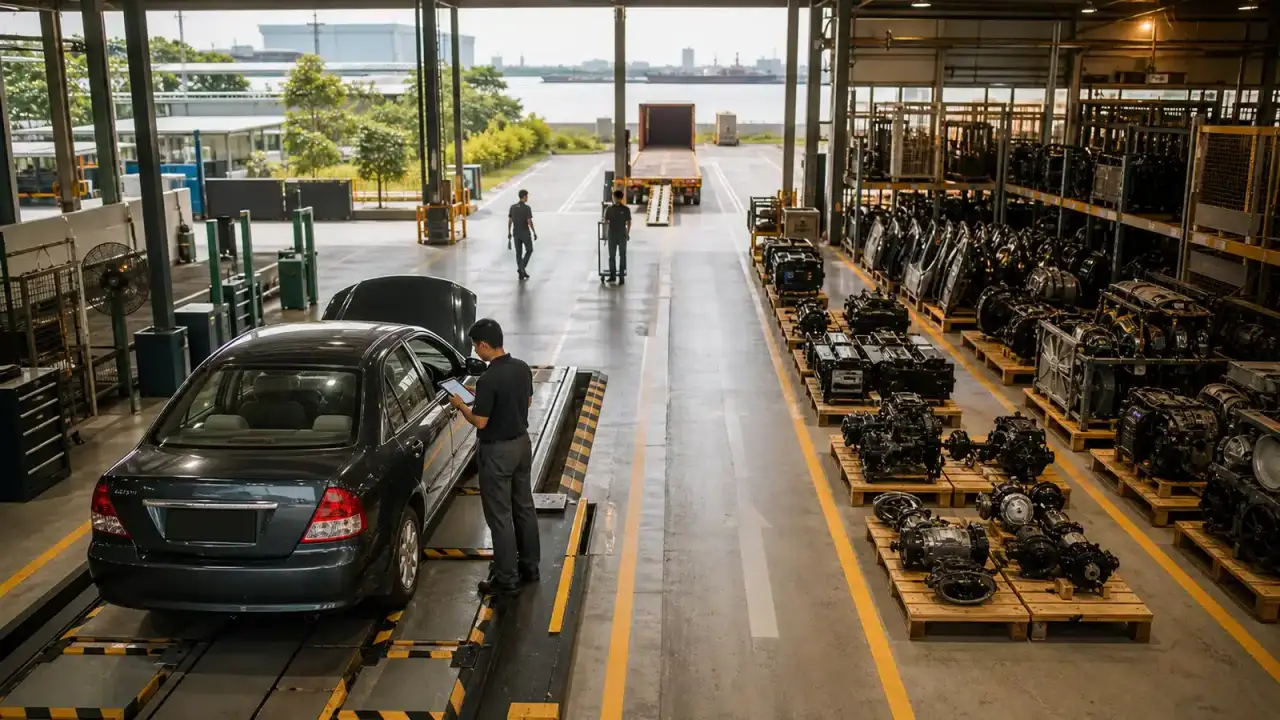
Everise Auto works with businesses, vehicle owners, workshops and overseas buyers across local vehicle selling, scrapping, dismantling, packing and export. Depending on condition and demand, the team can assess a vehicle for local sale, complete export, engine or gearbox recovery, used-parts supply, dismantling or material recovery.
A business can submit one vehicle or a fleet list with make, model, registration year, mileage, COE expiry, condition, location, finance status, photographs and known faults.
Company-vehicle sale checklist
- An authorised person is managing the sale.
- Vehicle details and condition are recorded accurately.
- Outstanding finance and LTA matters are resolved.
- GST treatment has been confirmed.
- The buyer and payment details are verified.
- The final price and included equipment are in writing.
- Company data, cards and devices have been removed.
- Transfer, deregistration or export steps are complete.
- Collection and disposal evidence have been retained.
- The fixed-asset and insurance records are updated.
Sell company vehicles with a clear process
A fleet sale runs smoothly when authority, finance, GST, payment, transfer, equipment and record-keeping are settled before collection day. If export is being considered, an experienced buyer can also identify demand for complete vehicles, engines, gearboxes or reusable components.
Everise Auto can review one company vehicle or a larger fleet and explain whether local sale, export, parts recovery or scrapping offers the most practical route.
Note: Vehicle, tax and transfer requirements can change. Confirm current requirements with the relevant Singapore authorities and professional advisers before completing a transaction.