
If you are comparing Singapore car exporters or searching “sell your car Singapore,” you may be trying to answer one practical question: will you receive more by selling the vehicle locally or exporting it?
There is no single answer for every car.
A roadworthy vehicle with a popular model, a clean history, and a useful COE balance may perform well in the local resale market. Another vehicle may attract a better export assessment because its model, engine, gearbox, or reusable components are in demand overseas.
The best option depends on who values the vehicle most, what costs are deducted, and how much work is required to complete the transaction.
This guide compares local selling and vehicle export so that you can evaluate the final net amount rather than choosing an offer based only on the first number you receive.
Quick Answer: Is It Better to Sell Locally or Export?
Selling locally may be more suitable when:
- The vehicle is roadworthy
- The model is popular among Singapore buyers
- It has a useful amount of COE remaining
- Its service and accident history are clear
- It can be financed and resold easily
- You have time to advertise, arrange viewings, and negotiate
Exporting may be worth considering when:
- Local demand for the model is weak
- The vehicle has value in an overseas market
- The car is damaged but has usable major components
- Its engine, gearbox, or body parts are in demand
- The vehicle is approaching deregistration
- An exporter already has a suitable buyer or destination market
The correct comparison is not simply:
Local quotation versus export quotation
It is:
Final local-sale proceeds versus final export proceeds, including applicable rebates, deductions, collection costs, and administrative responsibilities.
Local Sale and Export: The Main Differences
| Factor | Selling locally | Exporting the vehicle |
|---|---|---|
| Main buyer | Singapore dealer or private buyer | Exporter or overseas buyer |
| Vehicle status | Usually remains registered | Usually deregistered for permanent export |
| Main valuation focus | COE balance, depreciation, condition, and local demand | Overseas demand, parts value, condition, and shipping cost |
| Ownership process | Ownership transferred to a new local owner | Vehicle exported, and disposal proof submitted |
| Road tax and rebates | Transfer with the vehicle | Unused road tax and eligible rebates may be handled after deregistration |
| Paperwork | Ownership transfer | Export permit, shipping documents, and LTA disposal records |
| Best suited to | Roadworthy and locally desirable cars | Vehicles with stronger overseas or parts demand |
| Main risk | Slow sale, negotiation, or buyer financing issues | Document errors, deductions, or incomplete disposal proof |
What Does Selling a Car Locally Involve?
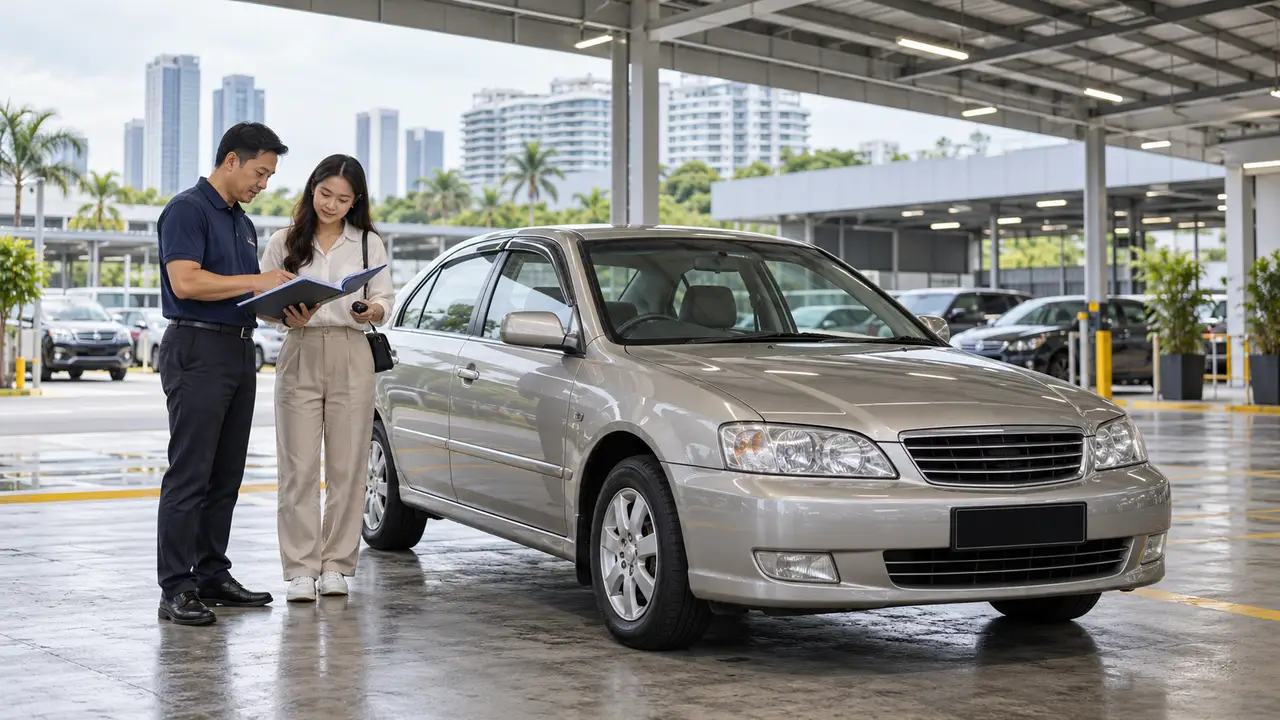
A local sale means transferring the registered ownership of the vehicle to another individual or business in Singapore.
Under current LTA ownership-transfer requirements, the transfer should be completed within seven days. The vehicle should not have outstanding financing, road-tax arrears, or other unresolved matters. Sellers should also make sure that payment has been received before completing the transfer and handing over the vehicle.
When ownership is transferred locally, the vehicle remains registered for use in Singapore. Its remaining road tax and any vehicle rebates attached to it generally move to the new owner.
A local buyer may be:
- A private individual
- A used-car dealer
- A direct car-buying company
- A workshop or trader
- A business purchasing the car for continued local use
The buyer is usually interested in the vehicle as a complete, roadworthy unit that can be driven, financed, or resold in Singapore.
How Do Local Buyers Calculate a Car’s Value?
Local buyers commonly consider several factors before making an offer.
Remaining COE Period
A car with several years of COE remaining may appeal to buyers who want to avoid the cost of registering a new vehicle.
However, the remaining COE must be considered together with the asking price. Buyers frequently compare annual depreciation rather than looking only at the total purchase price.
PARF Eligibility
A younger vehicle may retain an eligible PARF value. This can influence its resale price because the next owner may eventually receive the rebate when the car is deregistered, subject to the applicable conditions.
When ownership is transferred locally, vehicle rebates generally remain attached to the vehicle and move to the next owner.
Condition and Service History
A locally sold car is usually more attractive when it:
- Starts and drives properly
- Has been serviced regularly
- Has no unresolved warning lights
- Has a clear accident history
- Does not require immediate major repairs
- Includes supporting maintenance records
A buyer who intends to drive or resell the car locally must consider whether it can pass inspection, qualify for financing, and be maintained economically.
Model Demand
Popular models may be easier to sell because buyers recognise them, workshops understand them, and replacement parts are readily available.
A rare model can still be valuable, but the number of interested local buyers may be smaller.
Cosmetic Condition
Paintwork, dents, interior wear, and missing accessories can influence the offer because a dealer may need to prepare the vehicle before advertising it.
Cosmetic condition may matter more in a local retail sale than in an export or dismantling assessment.
What Does Exporting a Car from Singapore Involve?
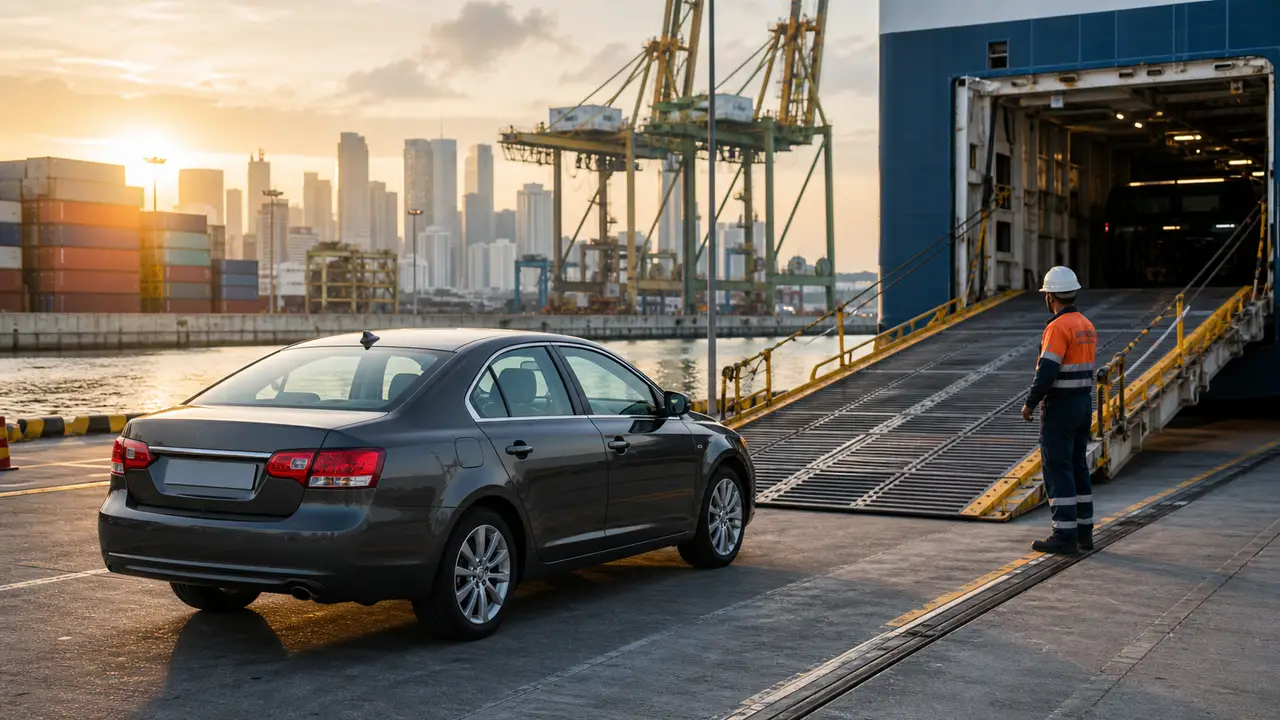
Exporting means permanently sending the vehicle out of Singapore rather than transferring it to another local owner.
A vehicle being permanently exported must be covered by a Customs export permit. Singapore Customs states that the owner, exporter, or appointed declaring agent must apply for the permit before export, and the vehicle’s value must be declared using its Free on Board value.
The LTA process depends partly on whether the vehicle is eligible for a PARF rebate.
For a PARF-eligible vehicle exported directly, the owner generally deregisters the vehicle, completes the export, and submits acceptable disposal documents within one month of deregistration. LTA’s deregistration and disposal guidance explains that a different sequence may apply to non-PARF-eligible vehicles.
Once a vehicle has been deregistered, it can no longer be kept or driven normally in Singapore. It must be properly transported, exported, scrapped, or stored in an appointed Export Processing Zone.
How Do Singapore Car Exporters Calculate Value?
An exporter may value the same vehicle differently from a local dealer.
Overseas Demand
A model with weak demand in Singapore may still be popular in another country.
Overseas workshops may already have experience repairing it, and compatible parts may be easier or cheaper to obtain in that market.
Complete-Vehicle Condition
A mechanically sound and complete vehicle may be suitable for export as a whole unit.
The exporter may look at:
- Make and exact model
- Registration and manufacturing year
- Mileage
- Engine capacity
- Transmission type
- Accident history
- Body condition
- Engine and gearbox condition
- Destination-market requirements
Value of Individual Parts
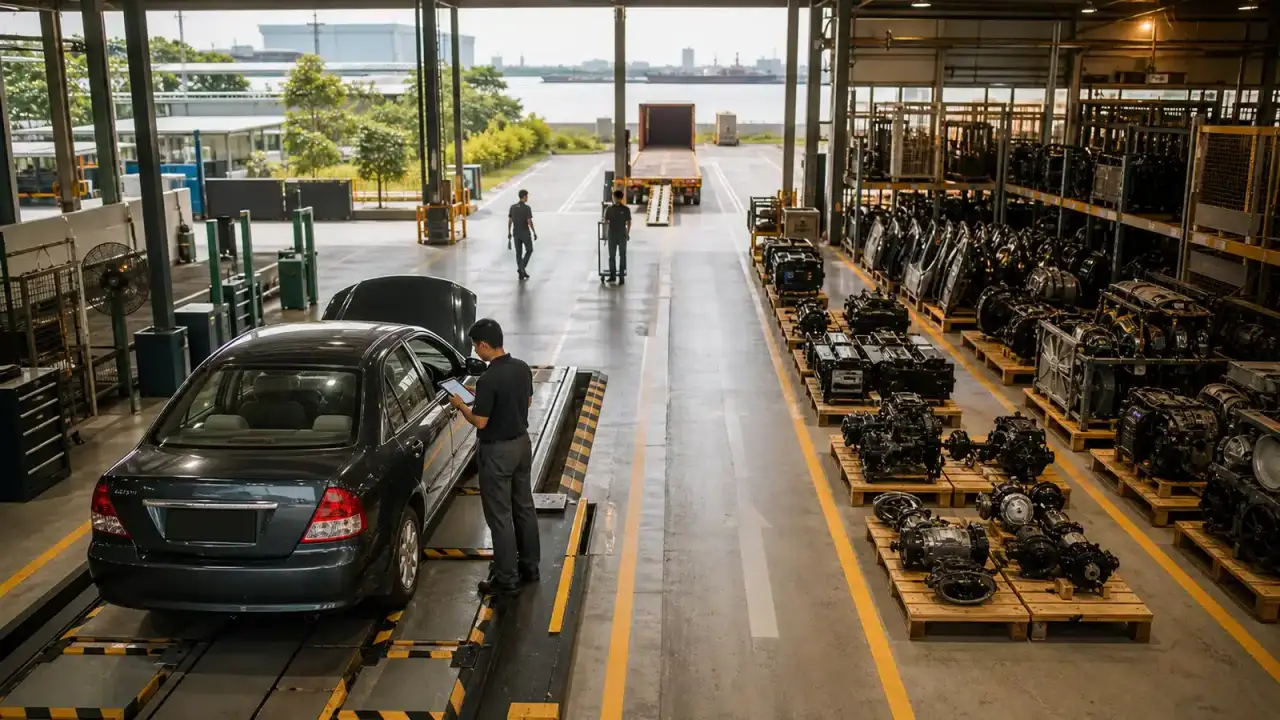
A damaged or non-running vehicle may still have a valuable engine, gearbox, doors, lights, rims, electronic modules, or interior parts.
The exporter may therefore calculate whether the car is more useful as:
- A complete export vehicle
- A repairable vehicle
- A donor vehicle for parts
- A combination of reusable components and recyclable material
Shipping and Handling Costs
The amount a similar car sells for overseas is not the amount the owner in Singapore will receive.
An exporter may need to account for:
- Vehicle collection
- Towing
- Storage
- Inspection
- Customs documentation
- Declaring-agent charges
- Port handling
- Freight
- Container preparation
- Destination costs
- Repairs or dismantling
- Business risk and margin
These deductions explain why an overseas retail price should not be treated as the expected export quotation.
Import Restrictions at the Destination
Every country has different rules concerning vehicle age, emissions, steering position, roadworthiness, and registration.
A vehicle may be popular overseas but still be unsuitable for a particular destination because of import restrictions.
Experienced Singapore car exporters consider both market demand and the practical cost of delivering the vehicle to that market.
Which Option Usually Pays More?
Neither local sale nor export always produces the highest amount.
The result depends on the vehicle.
Local Sale May Pay More When:
- The car is in good driving condition
- It has strong demand in Singapore
- The COE balance is attractive
- The vehicle can be financed easily
- The interior and exterior are presentable
- The model has a stable local resale market
Export May Pay More When:
- The model has stronger overseas demand
- Local buyers are concerned about age or mileage
- The vehicle has useful mechanical components
- The car is accident-damaged but largely complete
- A specific overseas buyer is looking for the model
- Its parts are more valuable than its local retail potential
The most useful approach is to obtain both types of quotation before deciding.
How to Compare the Final Net Amount
Do not compare offers until you understand what each one includes.
Local-Sale Calculation
A simplified local-sale comparison may look like this:
Agreed sale price
minus outstanding finance
minus dealer or administrative costs
minus repairs or preparation paid by you
equals estimated local-sale proceeds
Export Calculation
A simplified export comparison may look like this:
Exporter’s vehicle or body value
plus applicable PARF or COE rebates
plus an unused road-tax refund, where applicable
minus collection, documentation, or handling costs charged to you
equals estimated export proceeds
The exporter’s payment and LTA rebates may be separate. Confirm who receives each amount, when it will be paid, and whether the quotation already includes or excludes those rebates.
Advantages of Selling Locally
The Vehicle Remains Complete and Registered
You do not need to deregister the car before transferring it to a local buyer.
The Process Can Be Straightforward
When the car is not under financing and both parties are prepared, the seller can initiate the ownership transfer online, and the buyer can confirm it.
Popular Cars Can Attract Several Buyers
A roadworthy model with reasonable depreciation may receive interest from dealers and private buyers.
No International Shipping Is Required
There is no need to arrange freight, Customs permits, or overseas disposal records.
Disadvantages of Selling Locally
The Car Must Appeal to Singapore Buyers
High mileage, accident history, mechanical faults, or a short COE balance can reduce local demand.
The Sale May Take Time
Private selling can involve advertisements, enquiries, inspections, test drives, and negotiation.
Repairs May Be Requested
A buyer may expect warning lights, body damage, or mechanical problems to be addressed before paying the desired price.
Advertised Prices Can Be Misleading
A similar vehicle’s listing price does not prove that it sold for that amount.
Advantages of Exporting
Overseas Demand May Create Another Market
The vehicle may have value in a country where the model remains common and repair costs are lower.
Damaged Cars May Still Have Usable Value
An accident-damaged car may contain an undamaged engine, gearbox, interior, or body components.
Exporters Can Consider Several Outcomes
A company working with complete vehicles and used parts can compare whole-vehicle export, dismantling, parts recovery, and scrapping.
Everise Auto provides vehicle assessment, selling and scrapping support, used-parts services, and overseas vehicle and parts export arrangements.
Export May Be Practical Near the End of Local Use
A car that is no longer attractive to a Singapore retail buyer may still have value to an overseas buyer or parts market.
Disadvantages of Exporting
More Documentation Is Involved
Permanent export requires a Customs export permit and acceptable shipping or disposal documents.
The Owner Remains Responsible for Proper Disposal
The registered owner must ensure that the deregistered vehicle is properly disposed of and that the required proof is submitted within the applicable period.
Shipping Costs Can Reduce the Offer
Even when the vehicle has overseas demand, freight, handling, and preparation costs can reduce its net export value.
The Initial Quotation May Be Conditional
The offer may change if a physical inspection reveals undisclosed damage, missing components, or incorrect vehicle details.
Which Route Fits Your Vehicle?
Roadworthy, Popular Model With Several Years of COE Remaining
A local sale may be the stronger starting point.
The vehicle is easier to finance, inspect, and resell, and local buyers can use the remaining COE.
It may still be useful to obtain an export quotation if the model also has strong overseas demand.
COE Expiring Soon
Compare:
- Local buyer demand
- Export body value
- PARF eligibility
- Remaining COE rebate
- Cost of extending or renewing ownership
- Parts value
Do not assume that a short COE means the car has only scrap value.
Non-Running Car
A normal retail buyer may offer less because repairs and towing are required.
An exporter or parts buyer may still be interested in the gearbox, body panels, lights, electronics, interior, or other usable components.
Accident-Damaged Car
The location of the damage matters.
A rear-damaged vehicle may still have a good engine and front body. A front-damaged vehicle may retain useful doors, rear components, and interior parts.
Send wide and recent photographs before requesting a quotation.
Rare or Specialist Model
Local demand may be limited, but an overseas market may value the model more highly.
Exporting can be worth investigating when the car has an established enthusiast, commercial, or parts market abroad.
Commercial or High-Mileage Vehicle
A local buyer may focus heavily on wear and future maintenance costs.
An exporter may assess whether the complete vehicle or its mechanical components remain useful in another market.
Common Mistakes When Comparing Offers
Comparing a Gross Figure With a Net Figure
One quotation may include collection and paperwork, while another deducts these costs later.
Hiding Faults to Receive a Higher Initial Offer
Undisclosed damage usually leads to a revised quotation during inspection.
Deregistering the Vehicle Before Confirming the Plan
Once deregistered, the vehicle cannot be driven or kept for normal use in Singapore.
Removing Valuable Parts Too Early
Selling the wheels, engine components, or electronic modules separately may reduce the value and transportability of the remaining vehicle.
Assuming the Highest Offer Is Final
Ask whether the quotation is fixed, conditional, or valid only for a limited period.
Failing to Clarify Rebates
Confirm whether PARF and COE rebates belong to you and whether they are separate from the buyer’s payment.
Questions to Ask Local Buyers and Exporters
Before accepting an offer, ask:
- Is the quotation based on the vehicle’s present condition?
- Is it final or subject to physical inspection?
- Are towing and collection included?
- Are there any administrative deductions?
- When will payment be made?
- Who receives the PARF and COE rebates?
- Is the car being resold locally, exported complete, or dismantled?
- Who will handle the Customs export permit, where applicable?
- Who will submit proof of disposal to LTA?
- What written proof of collection or handover will I receive?
Get the important terms in writing before releasing the vehicle.
How Everise Auto Can Help You Compare the Options
Everise Auto works with car owners, workshops, and overseas buyers across vehicle selling, scrapping, used-parts recovery, and export arrangements.
Depending on the vehicle, the team can assess whether it may be suitable for:
- Local sale in its current condition
- Complete vehicle export
- Engine or gearbox recovery
- Local used-parts supply
- Overseas parts export
- Scrapping and material recovery
Everise Auto’s services include vehicle assessment, guidance on paperwork and deregistration, collection and handover arrangements, used-parts enquiries, container packing, and export logistics support.
To request a useful comparison, provide:
- Make and exact model
- Registration year
- Current mileage
- COE expiry date
- Mechanical condition
- Accident history
- Missing components
- Workshop diagnosis, where available
- Recent exterior and interior photographs
Accurate information allows each route to be assessed more realistically.
Frequently Asked Questions
Is Exporting a Car Better Than Selling It Locally in Singapore?
Not always. Local selling may be better for a roadworthy and popular vehicle with useful COE remaining. Export may be stronger when the model has overseas demand, local resale is weak, or valuable components remain usable.
Do I Need to Deregister a Car Before Selling It Locally?
No. A local sale normally involves transferring the registered ownership to the buyer. The vehicle should not have outstanding financing or unresolved matters, and the transfer should generally be completed within seven days.
Do I Need to Deregister a Car Before Exporting It?
The correct sequence depends on whether the vehicle is PARF-eligible. PARF-eligible and non-PARF-eligible vehicles may follow different LTA procedures, so the sequence should be confirmed before collection or shipment.
What Happens to Road Tax When I Sell Locally?
Remaining road tax generally follows the vehicle when ownership is transferred to a local buyer.
What Happens to Road Tax When I Deregister for Export?
The unused portion may be refunded to the last registered owner after deregistration, subject to the applicable process.
Can I Export a Car That Is Still Under Financing?
The financing interest should be settled before deregistration. Contact the finance company for the outstanding settlement amount and confirmation that the interest has been released.
Can an Accident-Damaged Car Be Exported?
Potentially. It may be exported complete for repair or dismantled so that usable components can be supplied separately. The result depends on the damage, vehicle model, and overseas demand.
What Documents Are Generally Needed for Vehicle Export?
A Customs export permit is required. For ocean freight, accepted disposal records generally include a Cargo Clearance Permit and an endorsed, non-negotiable Bill of Lading containing the relevant shipment and vehicle details.
Should I Repair My Car Before Requesting an Export Quotation?
Usually, request a quotation first. Repairs completed in Singapore may not increase the export offer by the same amount, especially when the buyer intends to repair the vehicle overseas or recover its parts.
Should I Accept the Highest Quotation?
Not automatically. Compare the final net amount, deductions, payment timing, paperwork responsibilities, and proof of handover.
Compare Both Markets Before Making the Decision
When people search “sell your car Singapore,” they often begin with local dealers because that is the most familiar route.
However, local resale is only one possible market.
Experienced Singapore car exporters may identify complete-vehicle, engine, gearbox, or parts demand that a local retail buyer does not consider.
Before choosing, compare:
- Local-sale value
- Export value
- PARF and COE rebates
- Collection and documentation costs
- Payment timing
- Administrative responsibilities
- The condition and completeness of the vehicle
Everise Auto can assess the vehicle’s present condition and explain whether local sale, complete export, parts recovery, or scrapping is the more practical next step.
Share your vehicle details, COE expiry date, and recent photographs to request an assessment before accepting an offer.